
In the world of high-end eyewear, luxury is not measured solely by a logo or a recognizable silhouette. Above all, it is a question of material.
Titanium, acetate and horn represent three different ways of interpreting luxury in contemporary eyewear. Different in origin and characteristics, yet united by the same idea: transforming a functional object into something worth collecting.
Titanium: Lightness as a Form of Perfection
Resistant, flexible and remarkably lightweight, titanium is one of the materials that best represents the evolution of luxury eyewear. Its strength allows for the creation of slim, sophisticated structures, while its lightness provides an almost imperceptible level of comfort when worn.
But in luxury eyewear, titanium is not simply a technical choice. It becomes an aesthetic material: hand-polished surfaces, engravings, sculptural details and precious finishes bring out its character.
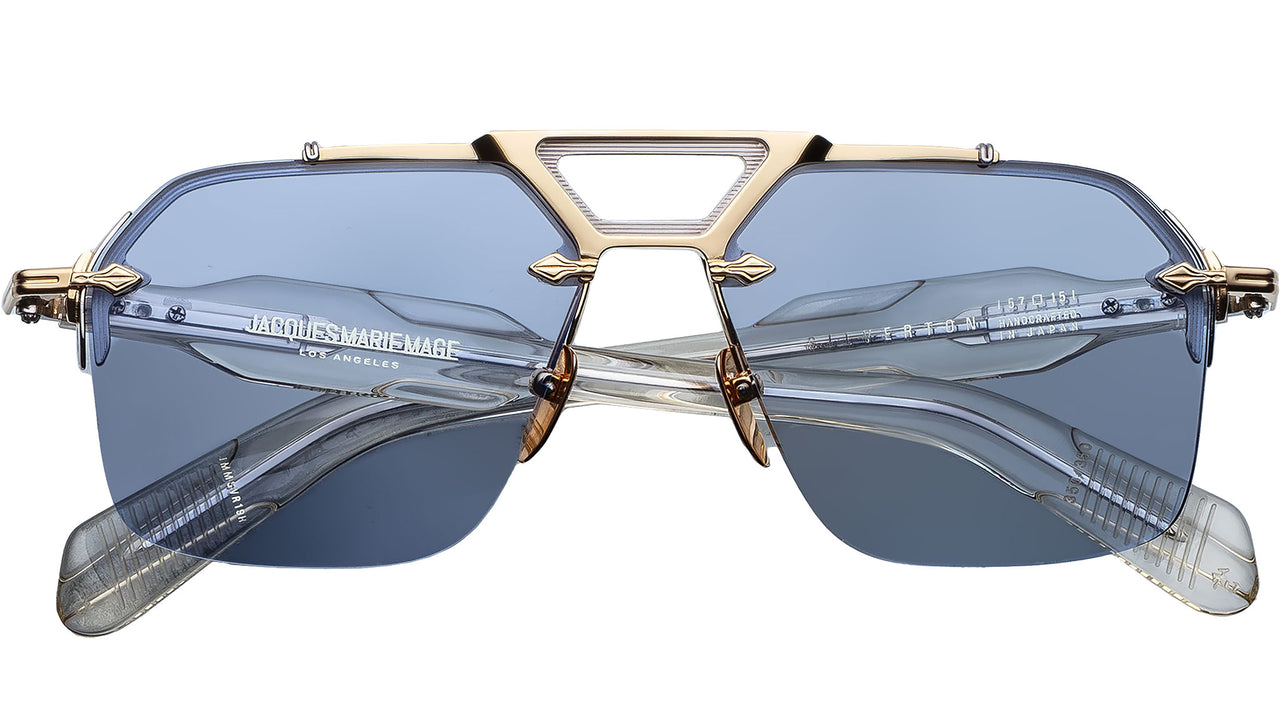
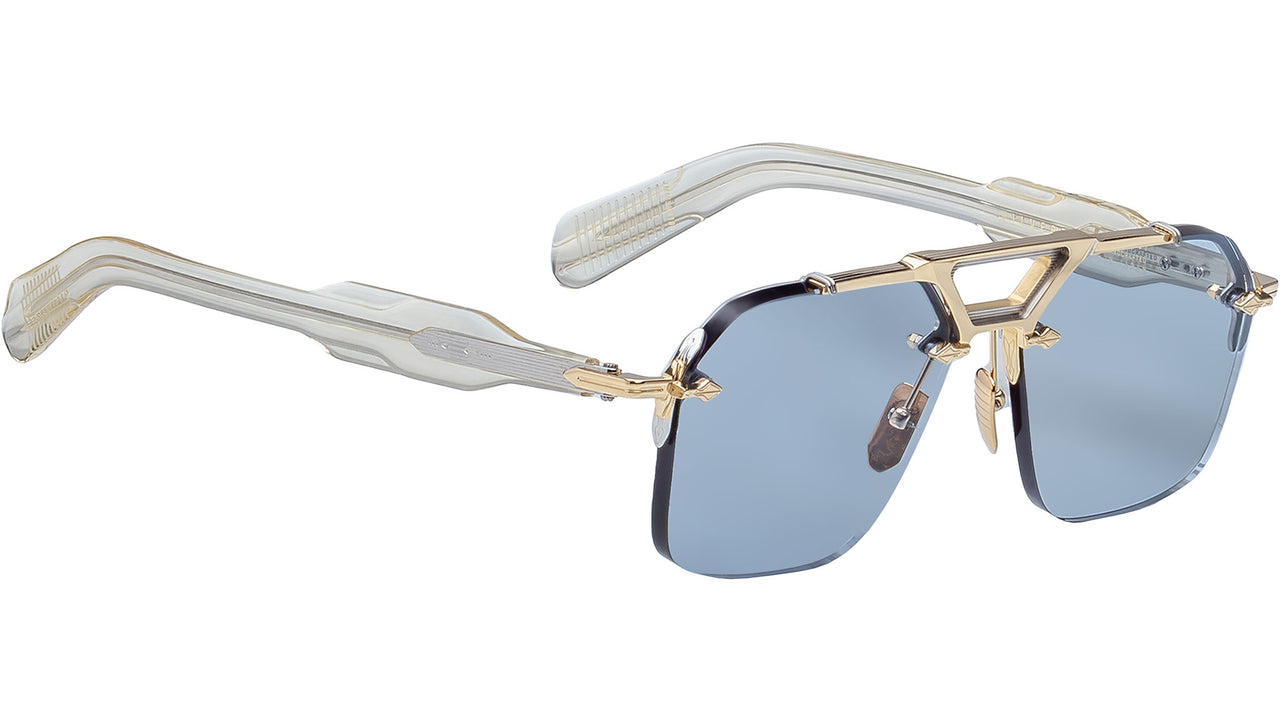
A striking example is the Titanium Collection by Jacques Marie Mage. Made in the brand’s Japanese atelier, the collection combines Japanese acetate with 100% beta titanium. Each frame requires more than 300 production steps and almost five months of work, including laser welding and repeated hand polishing.
The result is a material that almost disappears on the face, leaving only the precision of the design to stand out.
Acetate: Colour, Depth and Craftsmanship
Acetate is perhaps the material that has most profoundly reshaped the aesthetics of contemporary eyewear. Derived from cellulose, it allows for an extraordinary variety of colours, transparencies and layers. Above all, it gives designers a material that can be sculpted.
In the high-end segment, simply referring to “acetate” therefore means overlooking a far more complex artisanal process. Sheets can be layered, cut, shaped and polished to create surfaces with an almost three-dimensional depth.
Matsuda offers a perfect example of this approach. For example, in Matsuda M3124 Brushed Gold Black hand-polished Japanese acetate and hand-applied lacquer meet titanium temples decorated with filigree. It is precisely the contrast between the richness of the acetate and the precision of the metal that transforms the frame into an almost sculptural object.
It is precisely this combination of colour, volume and craftsmanship that makes acetate so expressive. Unlike materials chosen primarily for their technical performance, acetate allows the designer to work almost like a sculptor, carving away material until the desired balance of thickness, transparency and shape is achieved.
Horn: The Beauty of Imperfection
If titanium represents technological research and acetate embodies a combination of industrial and artisanal excellence, horn introduces another dimension: the uniqueness of nature.
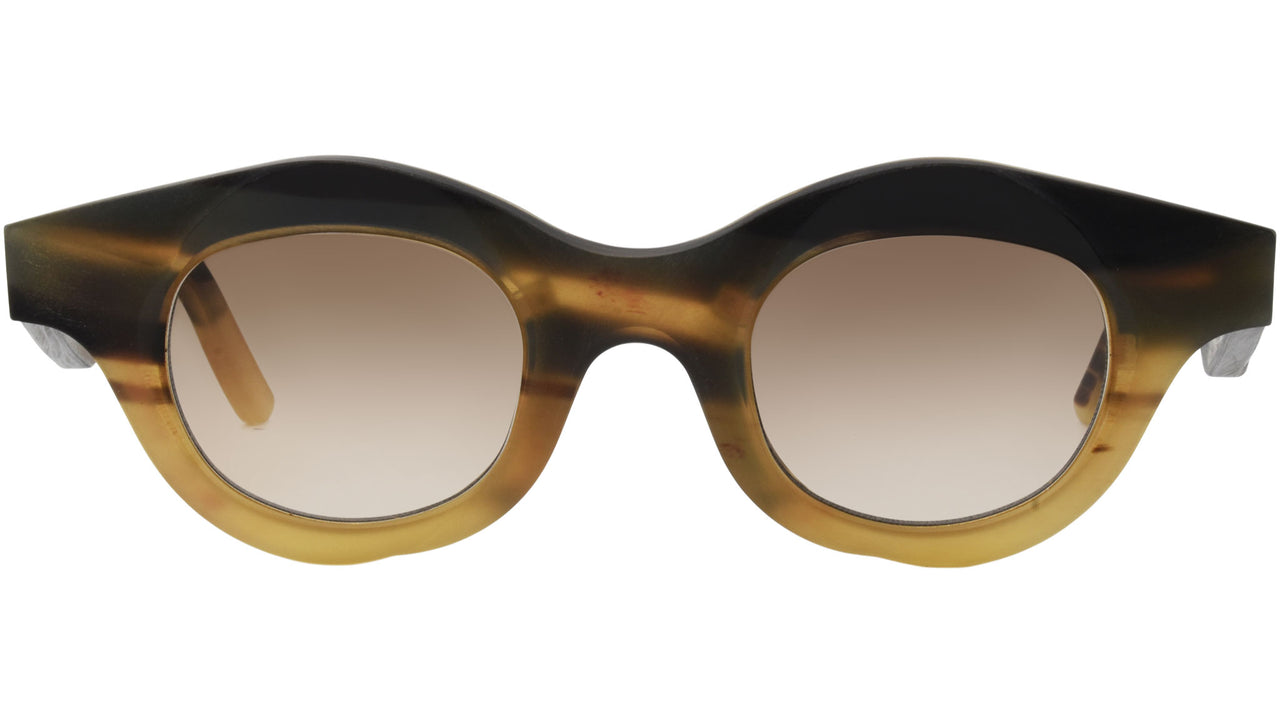
Every piece of horn has its own veins, shades and depth. No two surfaces are ever perfectly identical, making each frame a truly one-of-a-kind object. It is a particularly contemporary form of luxury, shifting the focus from serial perfection to individuality.
This is a defining characteristic of Rigards. The brand works with buffalo horn and titanium, combining them in frames crafted by hand. The natural material is selected for its colour and depth and carefully worked to preserve its individual characteristics.
The Rigards RG0119 DA011, for example, is entirely handcrafted from individually selected solid horn elements, with titanium temples. The more recent RG1062 BW takes this combination even further: natural horn and beta titanium meet a guilloché titanium structure, bringing together organic material, lightness and technical precision.
Three Materials, One New Idea of Luxury
Titanium, acetate and horn are not simply three alternatives for constructing a frame. They are three different languages.
Titanium speaks of precision, innovation and lightness. Acetate speaks of colour, volume and creative possibility. Horn speaks of nature, craftsmanship and individuality.
True sophistication, however, often emerges from their combination. This is where contemporary eyewear moves beyond its original function and becomes a design object: titanium can support acetate, acetate can soften a metal structure, while horn can interact with metal to create a dialogue between the natural and the technological.