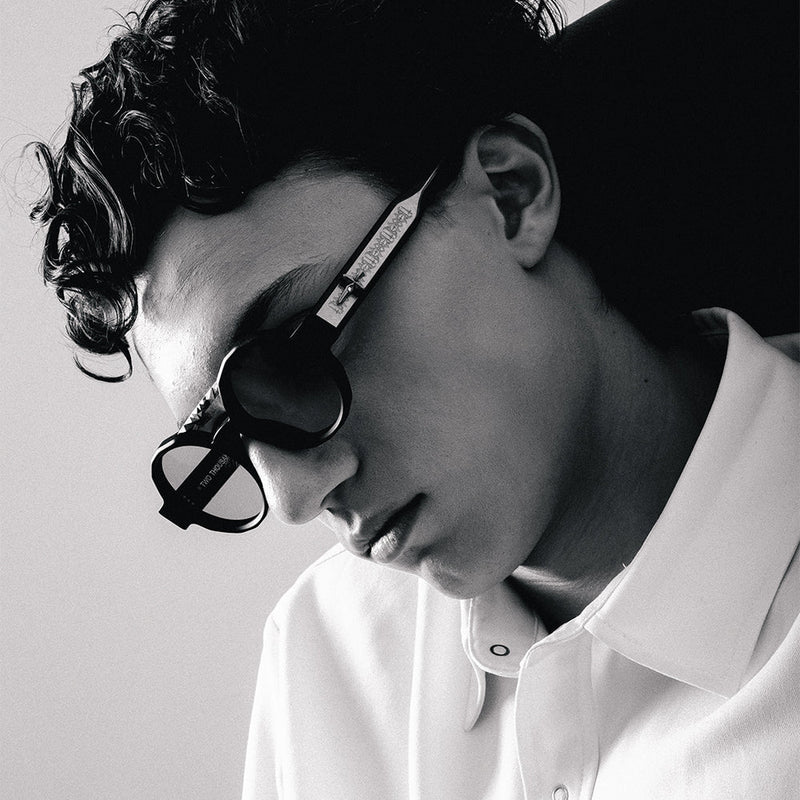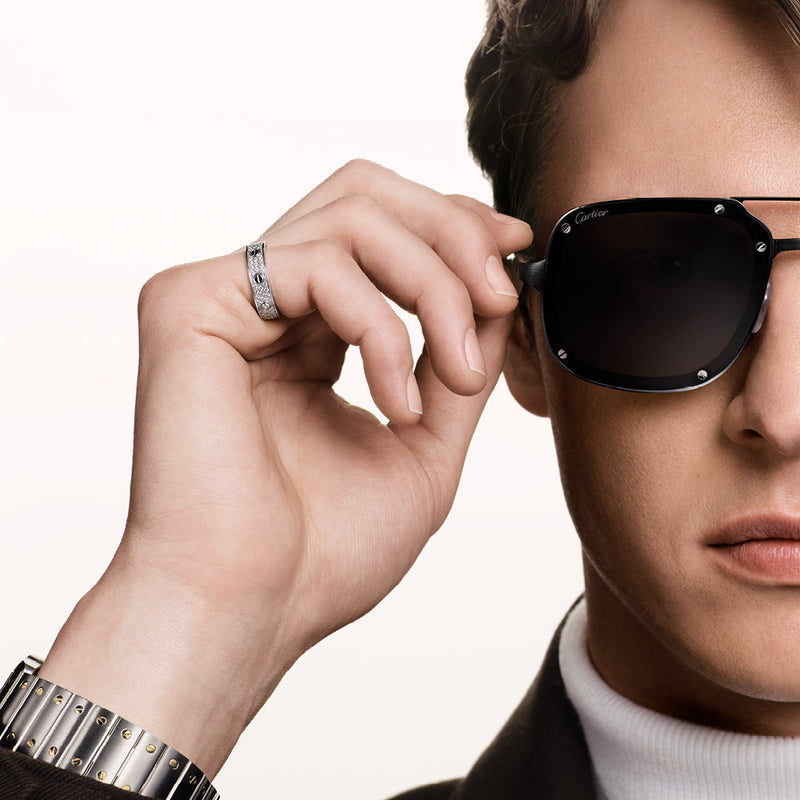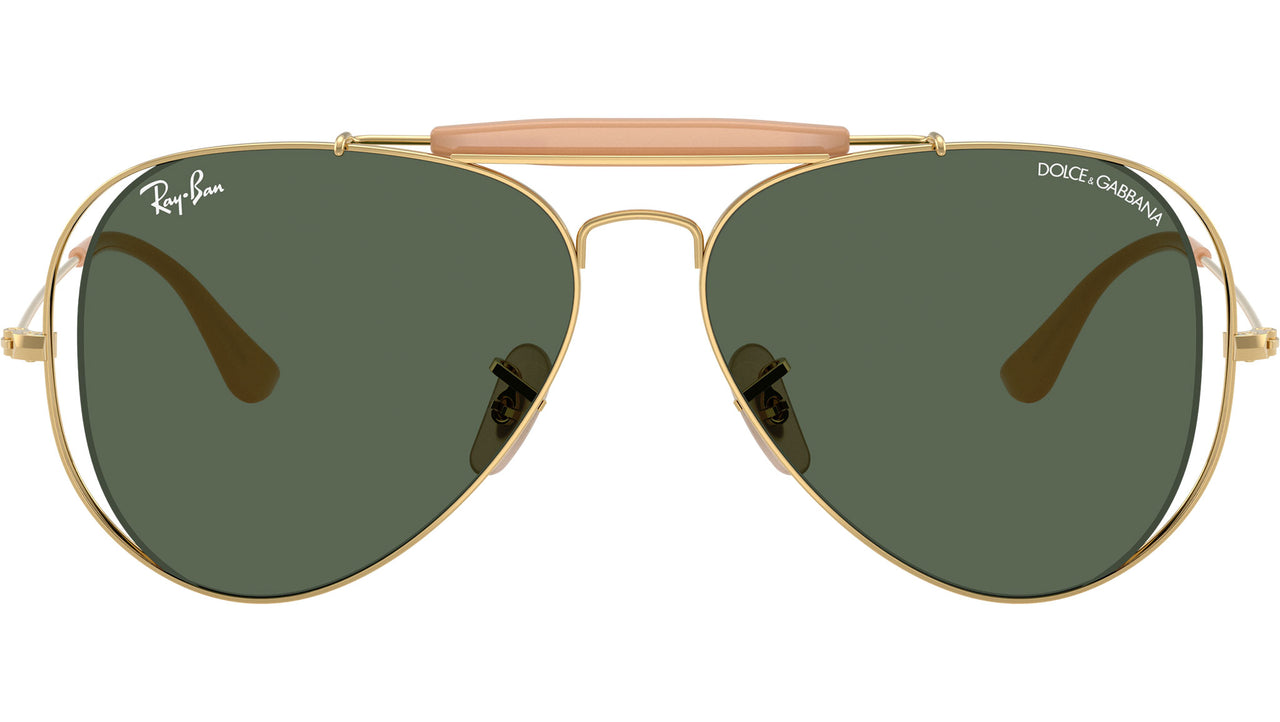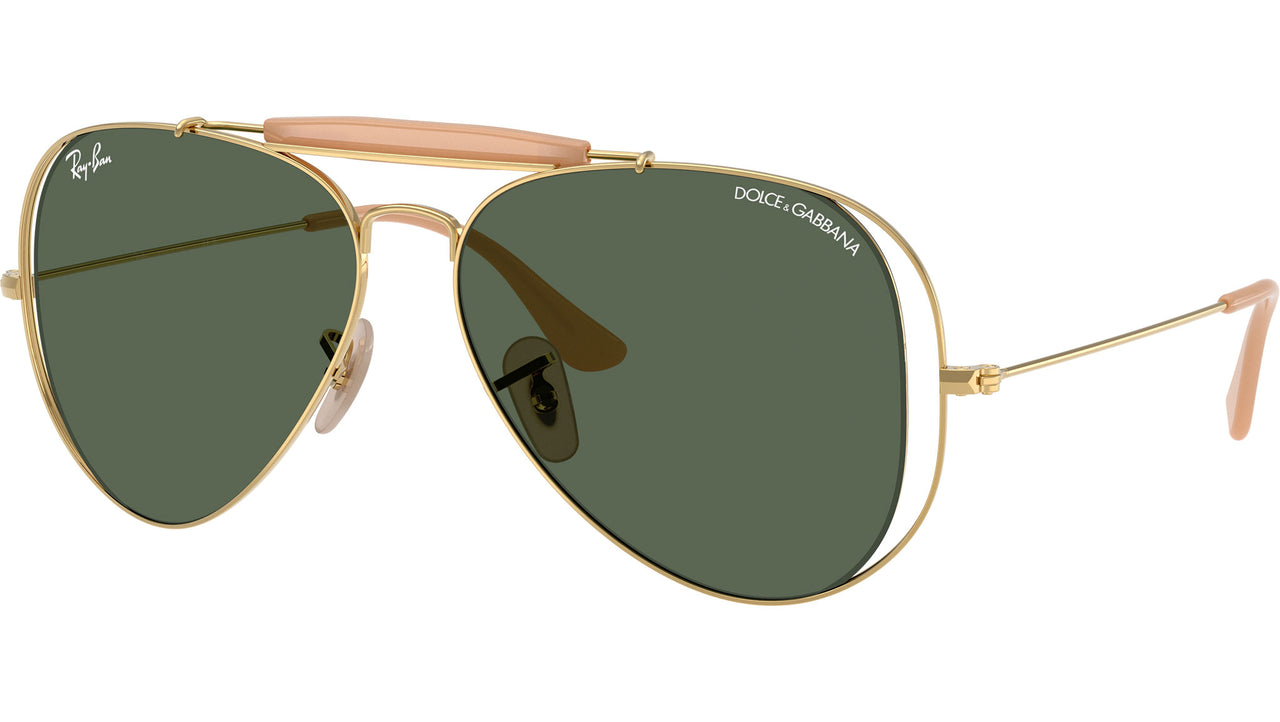

Two icons, one timeless silhouette, a capsule that shows what happens when archive meets the present.
There is a precise moment when an object stops being a product and becomes a cultural symbol. For Ray-Ban's Aviator, that moment happened decades ago and since then, the teardrop frame, slender, metallic, recognisable from ten metres away, has had nothing left to prove.
And yet, at ninety years from its launch, something has changed. Not in the silhouette, not in the character, but in the way it is told.
A partnership with deep roots
Before understanding what this capsule is, it is worth understanding where it comes from.
Dolce&Gabbana and EssilorLuxottica, the group that owns Ray-Ban, have been collaborating for over twenty years. In March 2026, they renewed their licensing agreement for the global development, production and distribution of Dolce&Gabbana eyewear through 2050. Not an ordinary extension: a long-term commitment that signals mutual trust and a shared vision.
The capsule with Ray-Ban is the first visible product of this new chapter. Not a commercial project of convenience, but a creative exercise between two brands that know each other well, speak the same language, that of Italian luxury, and chose to express it through a specific object: the Aviator, in its anniversary year.

Two models, two opposing sensibilities
The capsule is built around two silhouettes: the Shooter and the Outdoorsman II. Same Aviator root, entirely different character.
The Shooter: the past as a statement
The Shooter is the more overtly archival model, and it makes no attempt to conceal it.
The brow bar in mother-of-pearl is the first thing you notice: a craft reference that sits somewhere between jewellery and industrial design, firmly rooted in the Italian tradition. The integrated cigarette holder, originally conceived for military sharpshooters in the 1930s, is retained not for function but for geometry. It breaks the line of the frame in a way that feels deliberate, almost theatrical.
The teardrop lenses come in five colours: orange, pink, green, blue, yellow, with transparent or mirrored finishes. The Ray-Ban and Dolce&Gabbana logos are applied directly onto the lens surface, not tucked into a corner, not printed small. Front and centre, unapologetic.
What the Shooter communicates is an idea of presence. It is not a frame for blending in. It is a frame for those who understand that a strong aesthetic choice, made with conviction, is its own form of elegance.
The Outdoorsman II: restraint as refinement
The Outdoorsman II takes the opposite approach, and that is precisely what makes it interesting.
The pronounced brow bar gives an immediately graphic profile: bold, structural, architecturally resolved. But the slender metal construction lightens everything around it, creating a tension between weight and delicacy that is difficult to achieve and easy to appreciate. The rimless effect, that deliberate gap between lens and frame, is not a detail. It is the point. Space used as a design decision.
The lenses are available in the same five colours as the Shooter, mirrored or transparent, and carry both logos. But here, the Dolce&Gabbana signature surfaces through construction rather than decoration. It is in the proportion, the finish, the way the frame sits on the face.
From a distance, the Outdoorsman II reads as a refined Aviator. Up close, you understand exactly what it is. That gap between first impression and full understanding is where the design lives.

What this capsule tells us about Italian luxury today
Reading the Dolce&Gabbana × Ray-Ban capsule as a simple product release would be a mistake.
It is more interesting to read it as a statement of method: two brands with very strong identities, and seemingly distant in positioning, finding a shared territory without either having to step aside.
Ray-Ban brings the shape, the legend, the history of the Aviator. Dolce&Gabbana brings the ornamentation, the sensuality, the reference to the archive of Italian fashion in the 1980s. Together, they build something that is neither one nor the other: a third thing, with its own voice.
At a moment when luxury collaborations risk becoming marketing exercises more than design ones, this capsule chooses to return to the object. Two models. One case. A precise idea of what it means to reinterpret an icon without diluting its meaning.
The Aviator turns ninety. And doesn't look it.