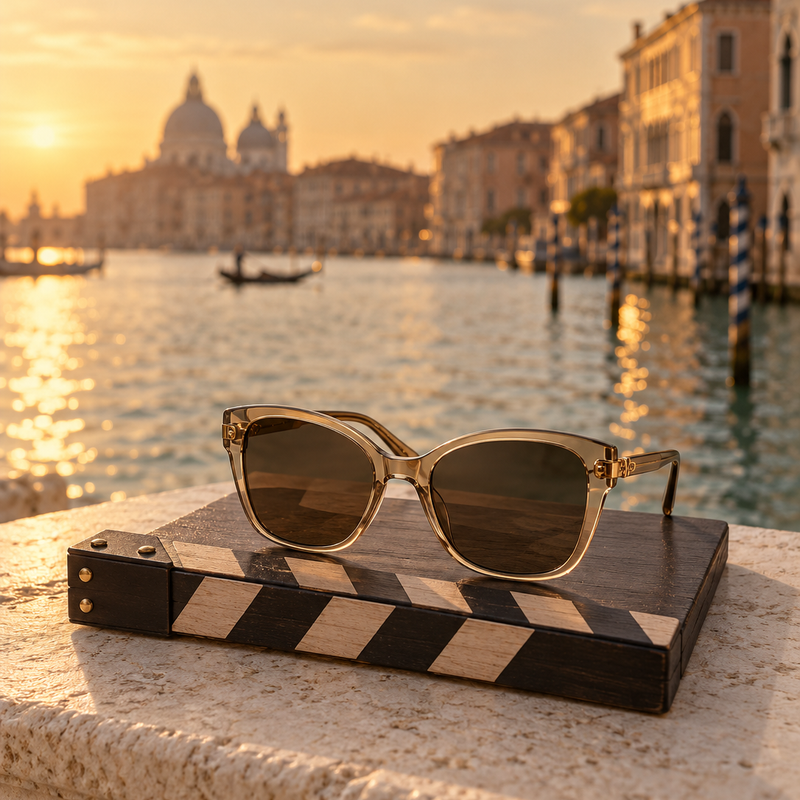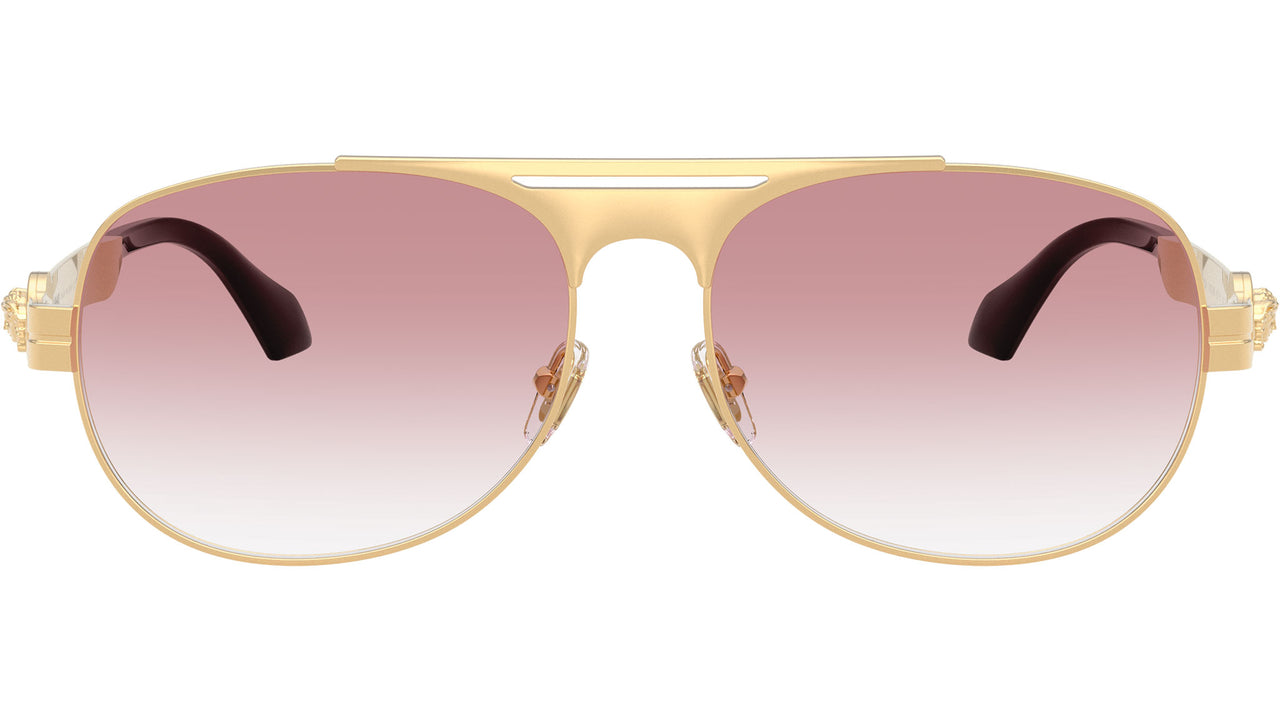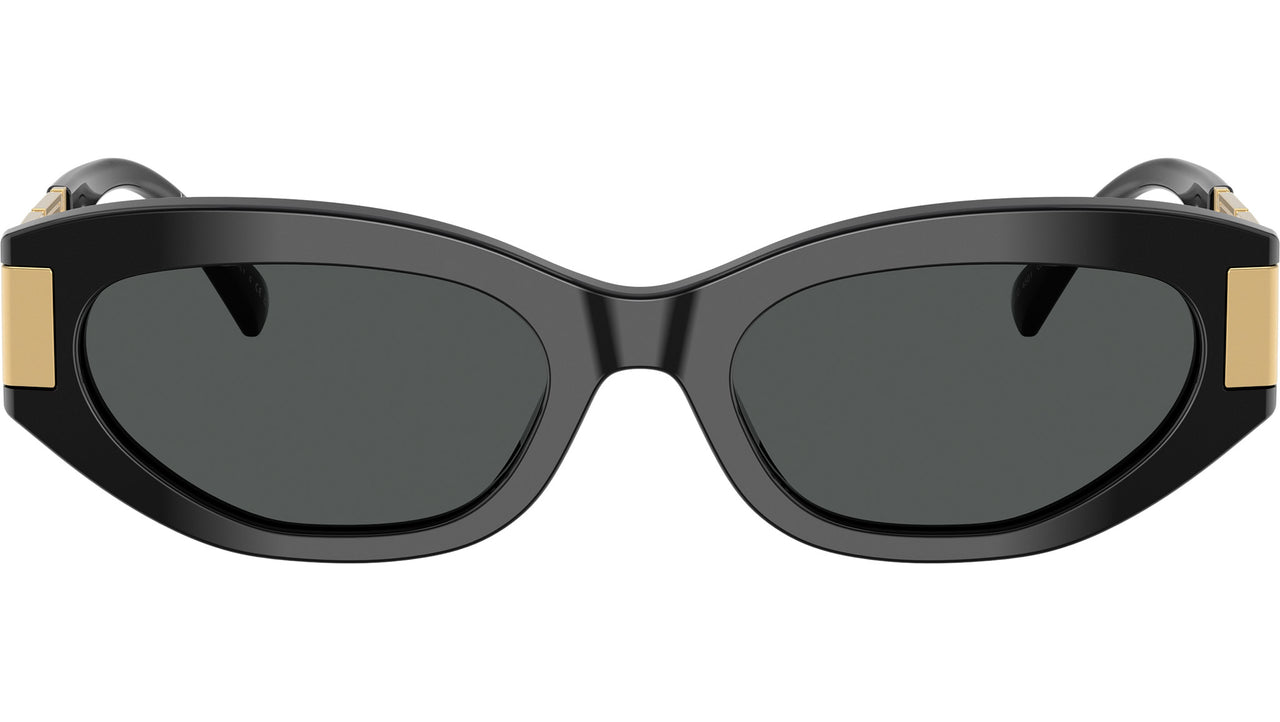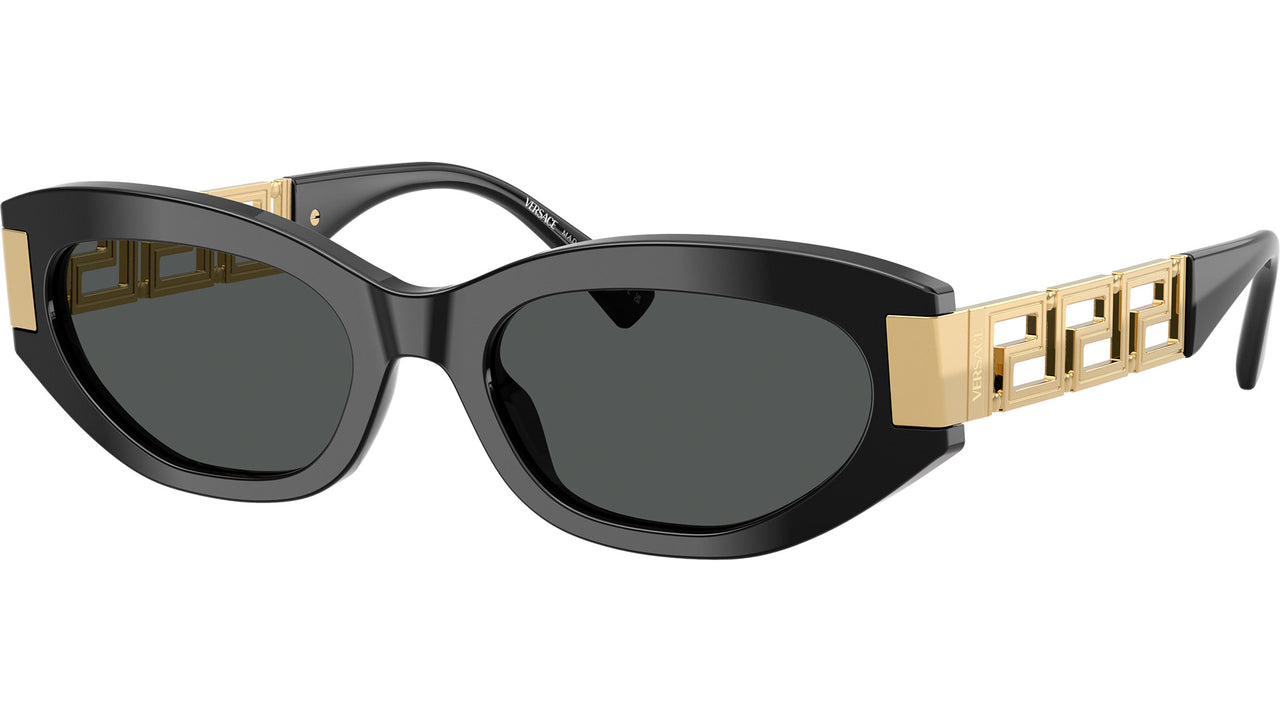

From Donatella to Vitale, from Vitale to Mulier: between 2025 and 2026, Versace experienced the fastest creative revolution in its history. Yet its eyewear tells a different story.
One House, Three Visions, Twelve Months
Some brands survive change because they are large enough to absorb it. Then there is Versace: a house that, within the span of a single year, underwent an unprecedented transformation and still emerged visually unchanged where it matters most, on the face.
March 2025: Donatella Versace steps down as creative director after twenty-seven years. It is not a surrender but a conscious transition, delivered with the confidence of someone fully aware of the weight of what she is passing on. Since 1997, the year of Gianni’s death, Donatella had preserved not just a fashion house, but an instantly recognizable visual language. And nowhere is that language more immediate than in eyewear.
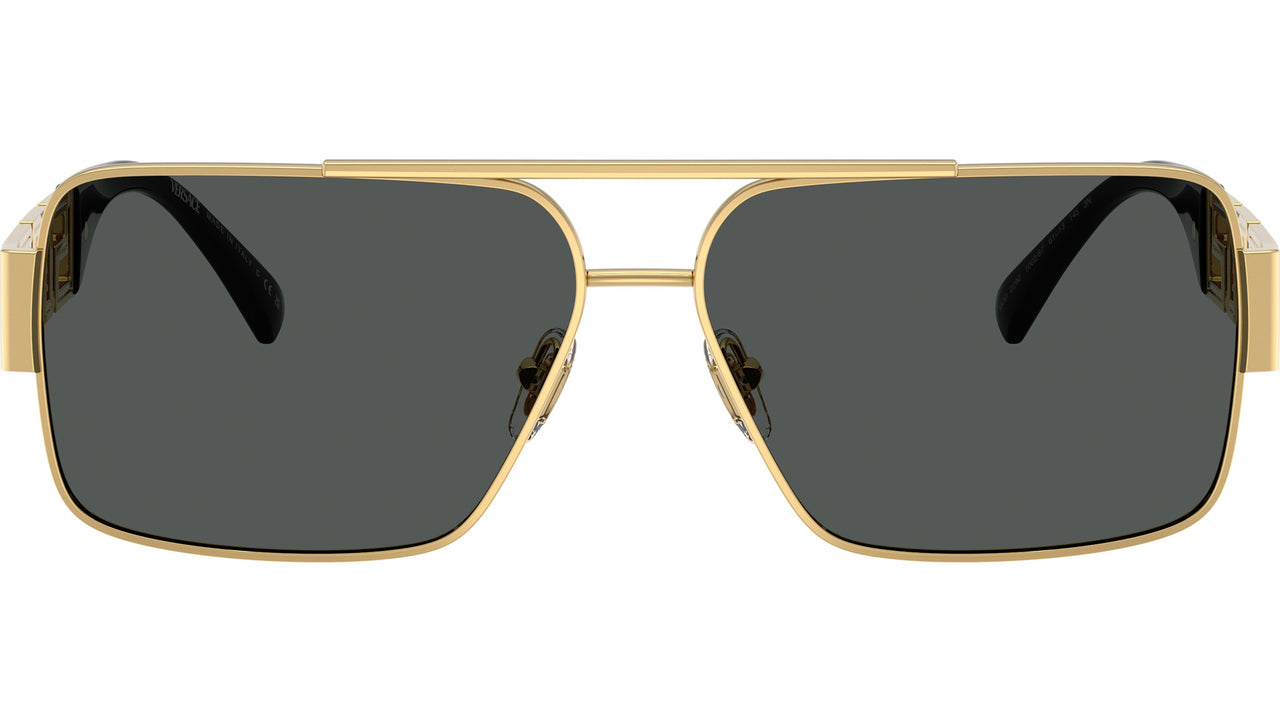
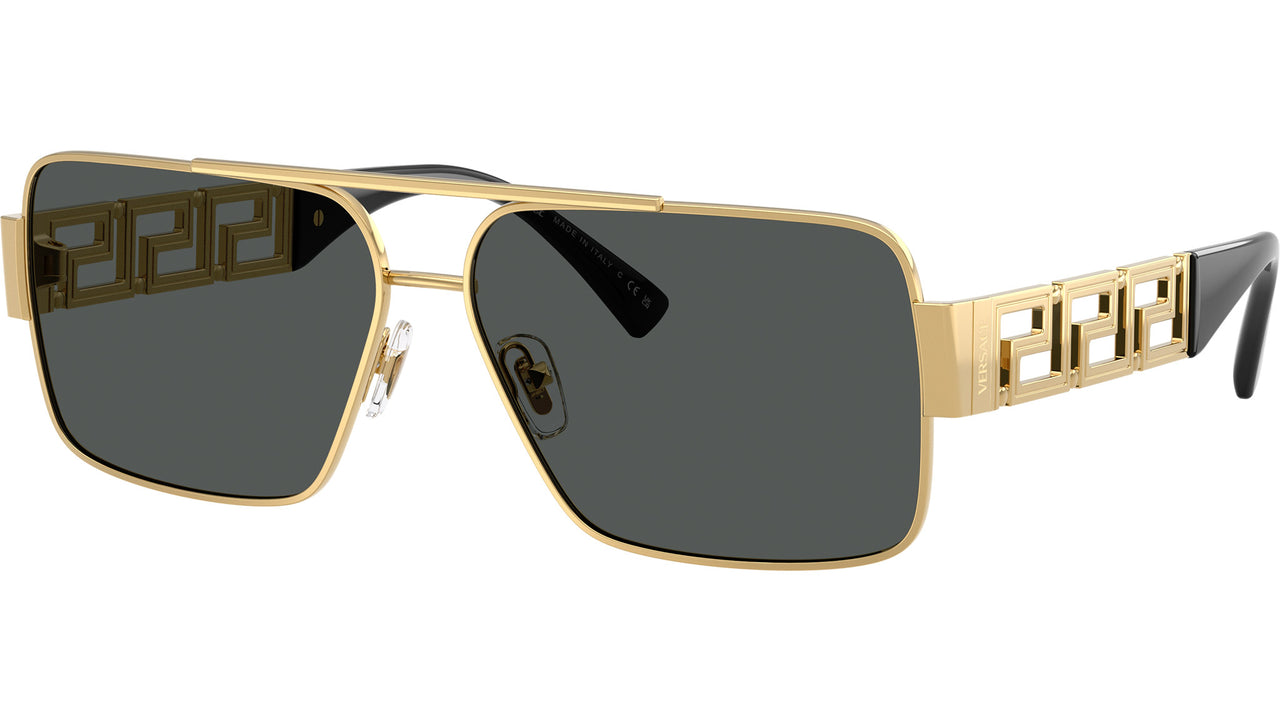
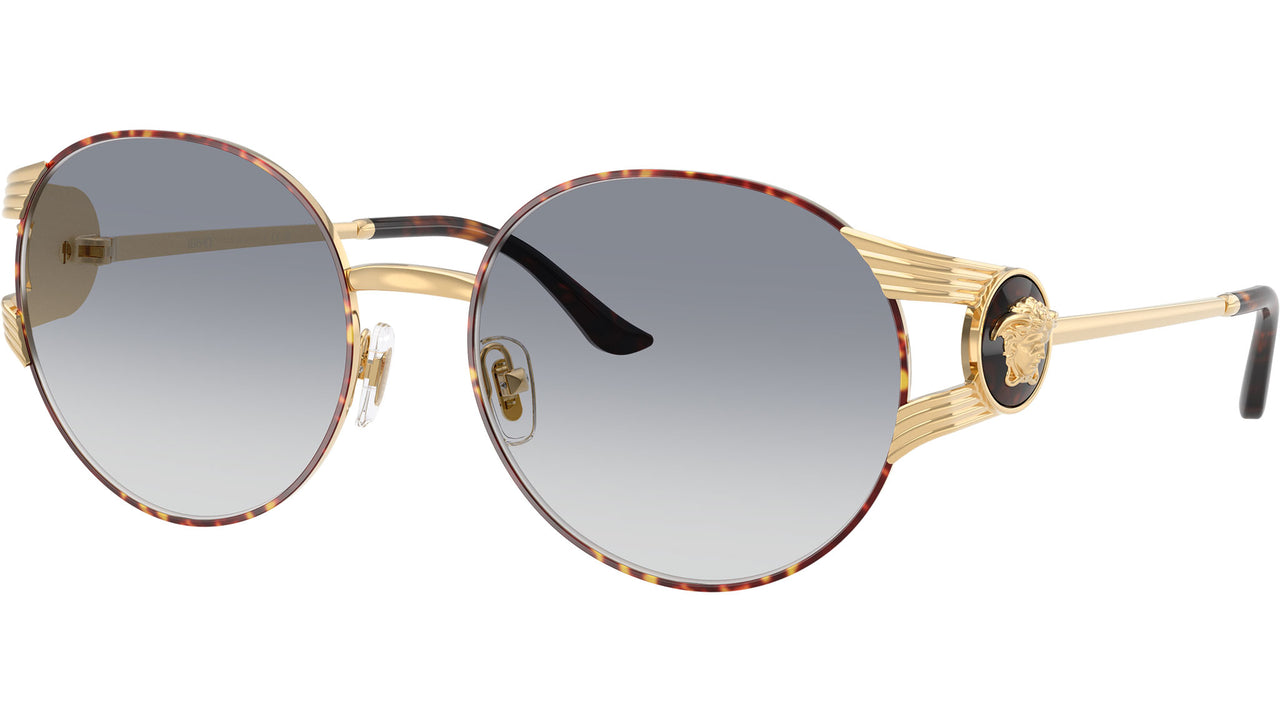
Because Versace is not only read on the runway, it is worn at eye level. The Medusa on a temple arm, the Greca pattern wrapping a frame, the gold reflecting light from a pair of oversized lenses: this is where the brand becomes instantaneous. Her legacy is not measured in collections alone, but in how quickly a pair of sunglasses can be identified from across a street.
In April, Dario Vitale arrives from Miu Miu, where he served as Design Director. He becomes the first outsider to design for Versace eyewear and ready-to-wear, a historic shift. His single collection, presented in September 2025, suggests a slightly more restrained direction, less theatrical, more structured, closer to Italian sartorial codes. Even eyewear under his brief begins to hint at a quieter confidence, the same symbols but with reduced volume, less noise.
Then, in December, as the Prada Group finalizes its acquisition of the house, Vitale exits. The transition is abrupt, almost clinical.
February 2026 brings the announcement the industry has been waiting for: Pieter Mulier, Belgian designer known for his work at Alaïa, will become Versace’s new Chief Creative Officer, effective July 2026.
Three creative directors. Three aesthetics. One product category that barely flinches: eyewear.

Who Is Pieter Mulier and Why It Matters for Eyewear
To understand what Versace eyewear might become under Mulier, it is essential to understand his design language.
Trained in architecture before entering fashion, Mulier built his career alongside Raf Simons, absorbing a disciplined approach to form that prioritizes construction over decoration. At Jil Sander, Dior, Calvin Klein, and later Alaïa, his work consistently leaned toward reduction, removing everything that is not essential until only structure remains.
At Alaïa, which he led from 2021, this philosophy became explicit. His final collections, including Spring/Summer 2026, distilled garments into pure form: precise, controlled, almost sculptural. Nothing excessive, nothing superfluous, nothing loud.
Eyewear under Mulier, however, will be the real test.
Because eyewear is where excess becomes visible immediately. There is no runway distance, no styling buffer, no narrative layering. A frame sits directly on the face. It either speaks or it does not.
Versace has always spoken loudly. Which is why Mulier’s appointment is so intriguing, not because he lacks the ability, but because he comes from a design culture where silence is a virtue, entering a brand where visibility is the point.

What Remains When Everything Changes: The Eyewear Code
Despite the turbulence at the top, Versace eyewear remains structurally unchanged in its core vocabulary.
The Greca motif still defines the temples of optical and sun frames, a continuous geometric rhythm borrowed from Ancient Greek art. The Medusa remains embedded in metal plaques and sculptural hinges, still functioning as a visual shortcut for recognition. Gold finishes, bold acetate, oversized proportions: the system remains intact.
Eyewear is, in fact, the most stable archive of Versace’s identity.
Unlike ready-to-wear, which shifts dramatically with each creative director, eyewear exists in a different temporal layer. It is seasonal, but also permanent. Commercial, but also symbolic. Designed within a collection, but worn independently of it. It must survive outside the context of the runway, on real faces, in real light, in real movement.
The Spring/Summer 2026 eyewear campaign, photographed by Frank Lebon, reinforces this continuity. The language remains familiar: “clash between couture and the street,” “heritage of Magna Graecia,” “uncompromising individuality.”

Versace Eyewear Today: What to Choose
For those seeking the purest expression of Versace identity, the most iconic frames remain those that place the Medusa front and center: bold temples, sculptural acetate, strong geometric lines. These are not subtle objects; they are declarations.
For a more contemporary reading, recent collections refine the same codes into lighter silhouettes, cat-eye and aviator shapes reworked with Greca detailing, slightly more controlled but still unmistakably Versace.
In eyewear, Versace is never really about discretion versus excess. It is about visibility. It is about how much of an identity you are willing to place directly on your face.
Because every pair of Versace glasses is already a statement, regardless of who is sitting in the creative director’s chair.
And in that sense, no matter how many names change above the atelier, the real designer of Versace eyewear remains the same: the system itself.